

Visit duration: 60 - 90 minutes
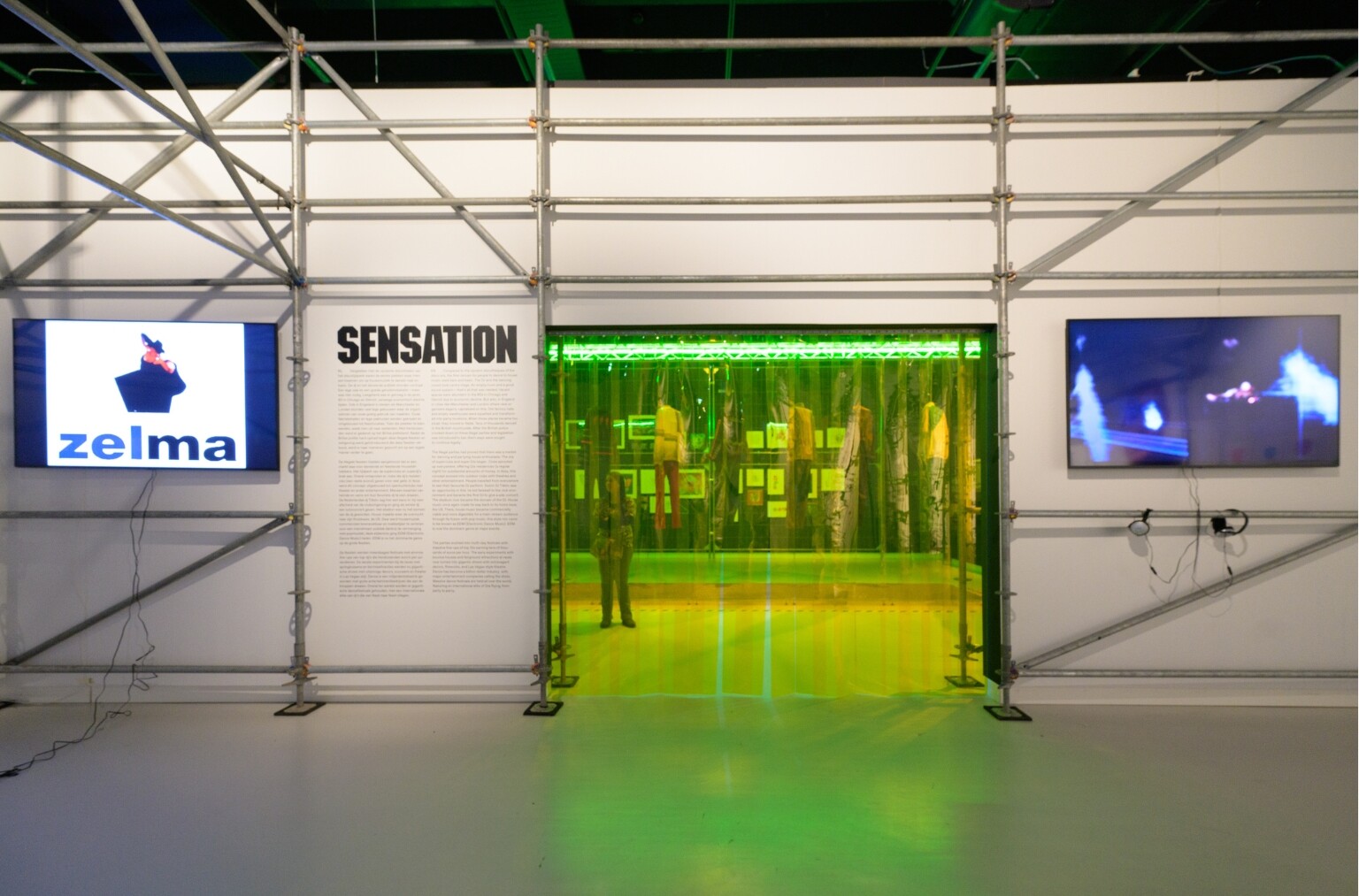
Electronic dance music is the sound of emancipation. Black and LGBTQ+ communities created a musical genre that enabled them to express themselves freely. That music has since gone mainstream, becoming a multi-billion-dollar industry. Design features centrally in the development of electronic dance music. Take the equipment used to make the music, from the first experiments with electronic instruments in Philips’ NatLab in the 1950s, through the revolution of compact Japanese synthesizers in the 1970s to contemporary laptops. Or the design of the spaces in which the music was (and is) danced to: from opulent New York discos to the dilapidated warehouses in Detroit where techno was born and today’s megalomaniac global stadium productions. Not to mention paraphernalia such as clothing, flyers, album covers, posters, merchandise and tickets. Dance – the design of a culture lets you discover the past, present and future of electronic dance music and see the important role played by design in the development of the most important musical genre of our time.

Music as emancipation
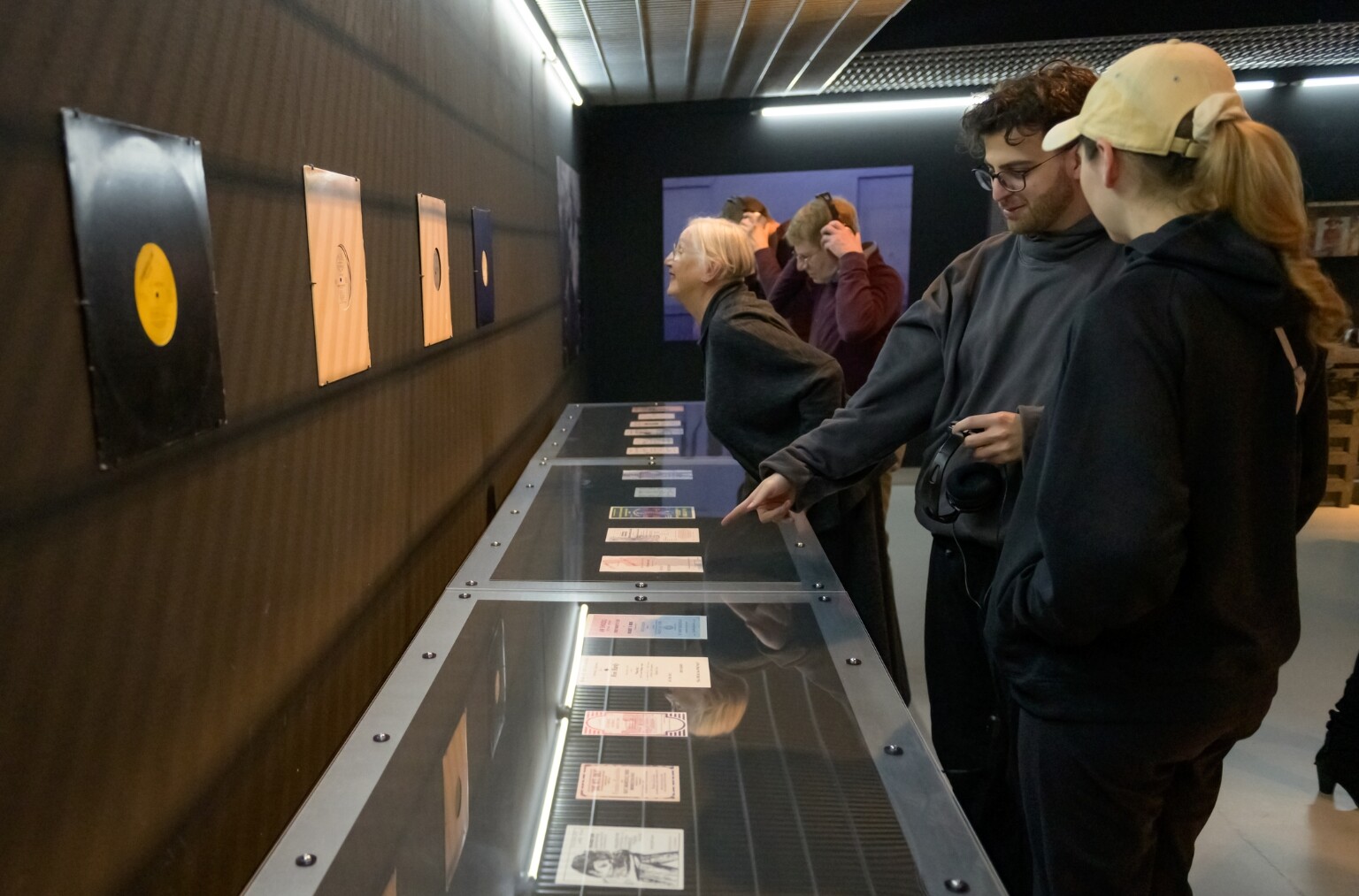
In the early 1980s, black, Latino and LGBTQIA+ communities in the United States used electronic dance music to create their own world. A sonic world in which they could safely express their identity through art. On the fringes of the night and the city, a scene emerged where people could experiment freely with everything from identity to the way music was made. In this part of the exhibition, you will see, among other things, a selection from Steve Terry’s archive. He collected more than 5,000 flyers from the early days of disco, house and techno. See the flyer from the first party where techno pioneer Jeff Mills DJed and the VIP membership cards from the legendary Studio54 nightclub.
From the laboratory to the bedroom
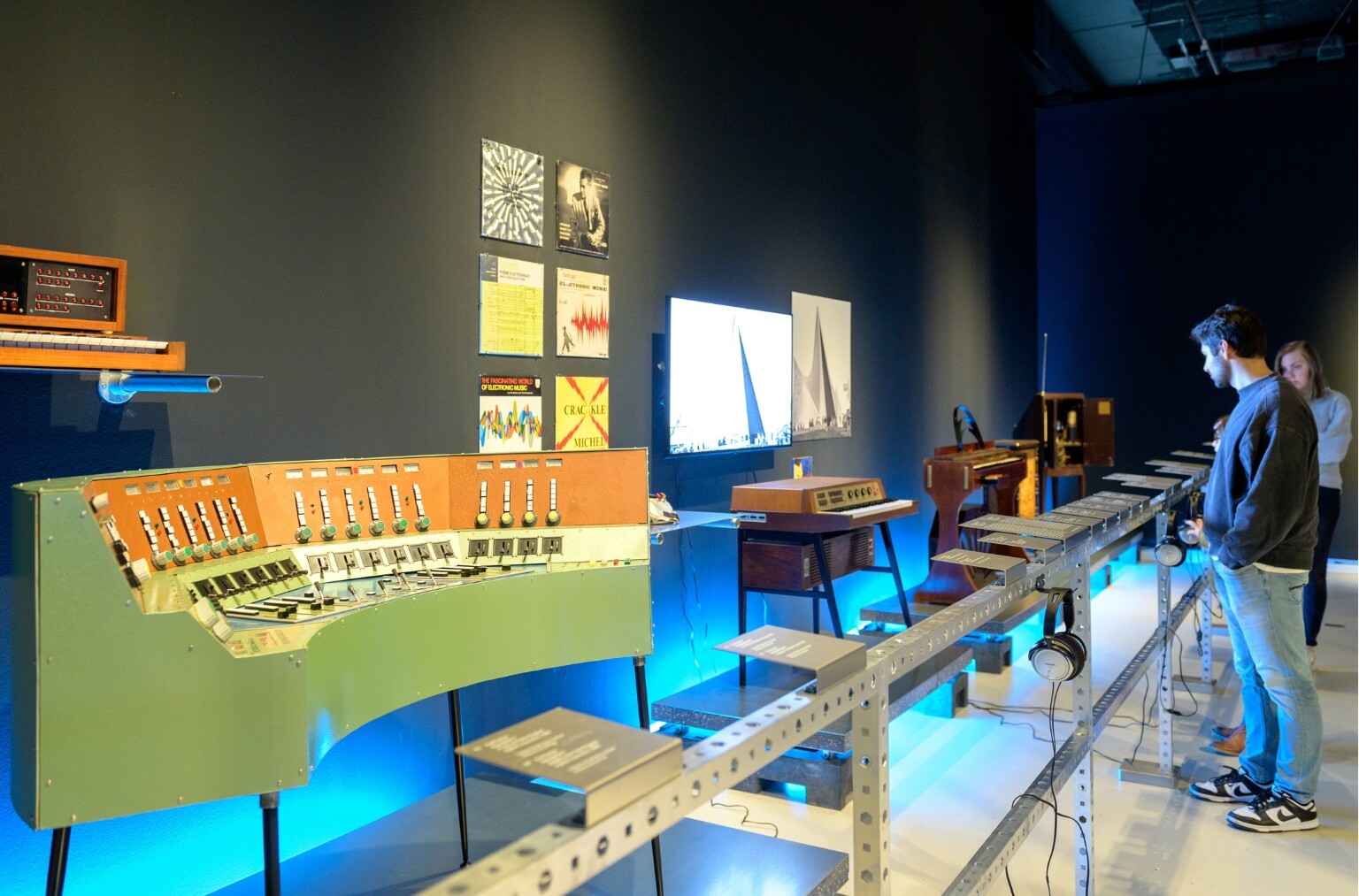
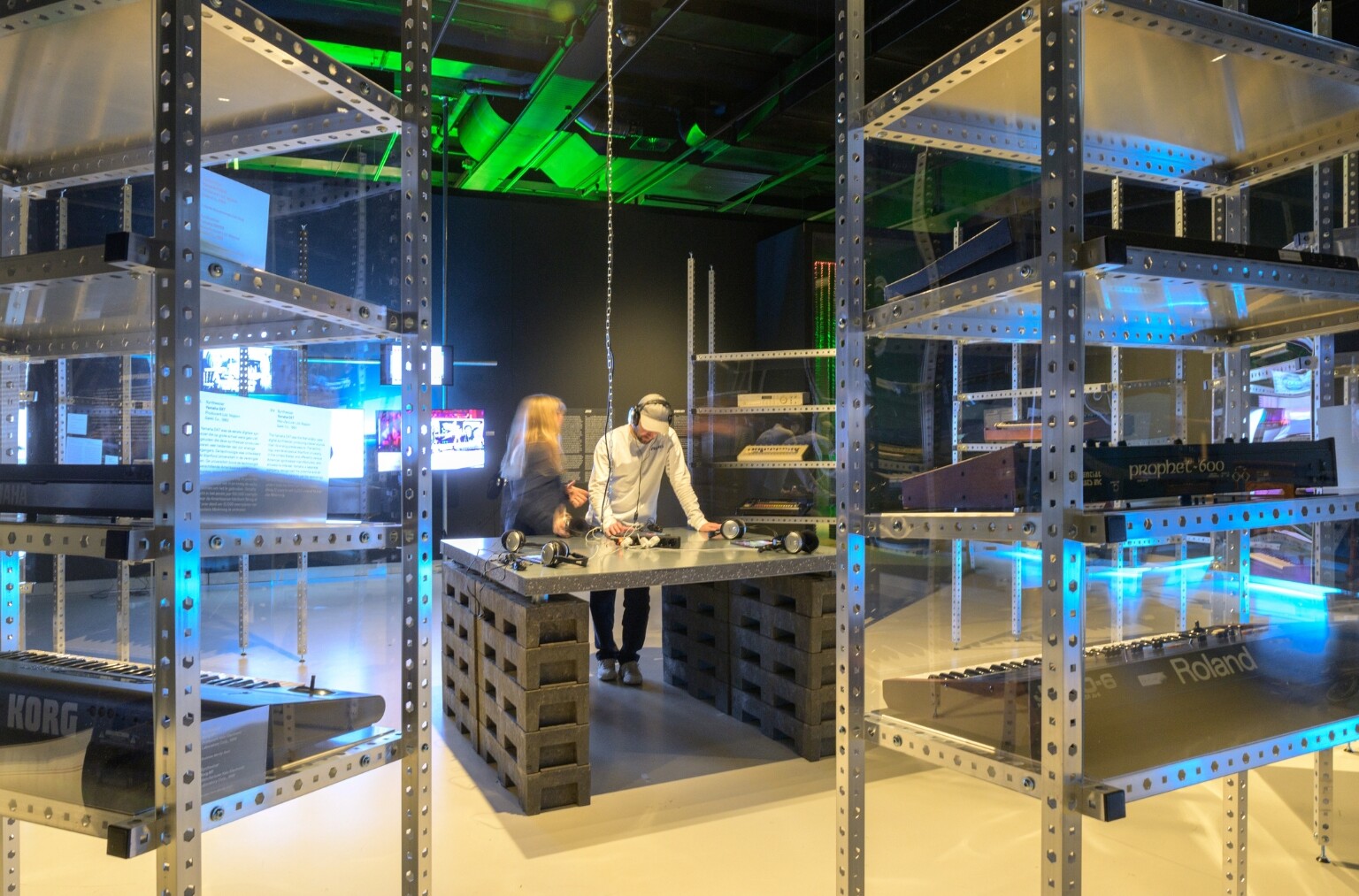
Shortly after the Second World War, the early pioneers of electronic music began to explore ways of creating sounds that differed from those commonly used in music. In laboratories, engineers and composers worked with all kinds of devices that produced electronic tones. Thanks to rapid advances in technology, such as digitisation and miniaturisation, creating electronic music became increasingly accessible. Nowadays, you can even make this music in your bedroom: all you need is a laptop for production and the internet for distribution. In this part of the exhibition, you will see a number of unique electronic instruments from the 1920s, such as the Theremin and the Ondes Musicales Martenot. You will also discover a collection of the most influential synthesizers and drum computers from the 1960s to the present day. On the interactive table, you can play the online versions of these instruments yourself.

Gabber for life
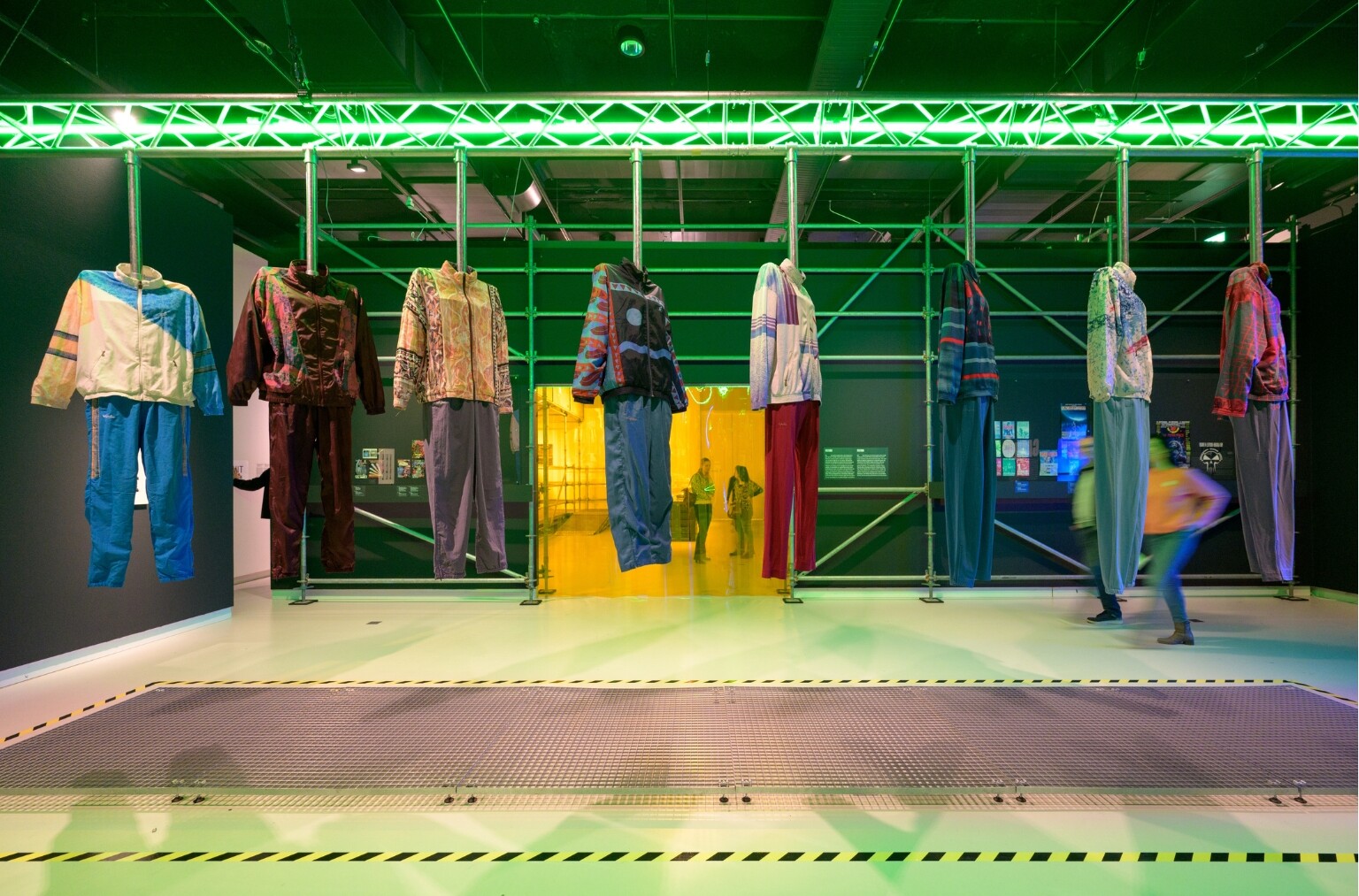
The Netherlands plays an important role in the development of electronic dance music; the gabber scene is a unique Dutch phenomenon and Dutch entertainment companies were behind many of the leading parties. In this part of the exhibition, you will see a large number of Australian tracksuits (the status symbol for gabbers) and meet Victor Feenstra, among others. As the resident illustrator for party organiser ID&T and the hardcore events Thunderdome, he painted countless posters for parties and illustrated CD covers for compilation CDs. He also designed logos for DJs and record labels. Feenstra’s work can be seen as the iconic aesthetic of gabber house. He also designed the campaign image for the exhibition.

Global stars in a billion-pound industry
The origins of this music may lie in dimly lit basements and abandoned factory halls, but today the scene looks very different. All over the world, huge stadiums and festival grounds are decked out with decorations to welcome partygoers. The DJs who perform here are global stars. In the last part of the exhibition, you can see how this culture has developed, with film footage, photographs, merchandise, flyers and posters from today’s most important dance parties.
This exhibition was curated by senior curator Yassine Salihine and Young Design curator Bao Yao Fei. The exhibition design was created by Studio Raito, and the graphic design by Studio Peter van Langen. The exhibition was produced in collaboration with the Musée de la musique – Philharmonie de Paris.


