Ali T. As’ad is a researcher, architect and editor. Together with head curator Yassine Salihine, he travelled to Stuttgart in 2024 to conduct research for the exhibition From Bauhaus to Mecca. There, they delved into the archive of architect Dr Mahmoud Bodo Rasch. Exclusively for the Third Floor, Ali reflects on his findings in Rasch’s remarkable archive — the drawings, the mechanical domes, the tent structures — and his personal reflection on what it means to dedicate your life to architecture as a cultural force.
Last year, curator Yassine Salihine, invited me to travel to Stuttgart to help identify, select, and interpret archival materials for an exhibition. At first, my task appeared simple: to sort through the physical archive of architect and engineer Dr. Mahmoud Bodo Rasch, trace drawings and photographs that bridged design process with built reality, and find what might speak to a Dutch museum audience. But as I began opening the drawers of the Planschränke in Rasch’s office and home, it became clear that this was more than the collection of a single architect. What unfolded was a three-dimensional map of how architectural thought traverses cultures, disciplines, family and faith. Much like the From Bauhaus to Mecca exhibition itself, this journey traced an unlikely yet graceful trajectory: from the experimental ethos of postwar German modernism to the sacred precincts at the heart of the Islamic world. What began as study of technical drawings became a meditation on faith made spatial, and on architecture in motion.
I came to this commission with my own history of crawling into the back rooms of architectural offices. For more than a decade, I practiced as an architect in studios in Brighton, London, Amman, Beirut, Istanbul, and Mumbai.
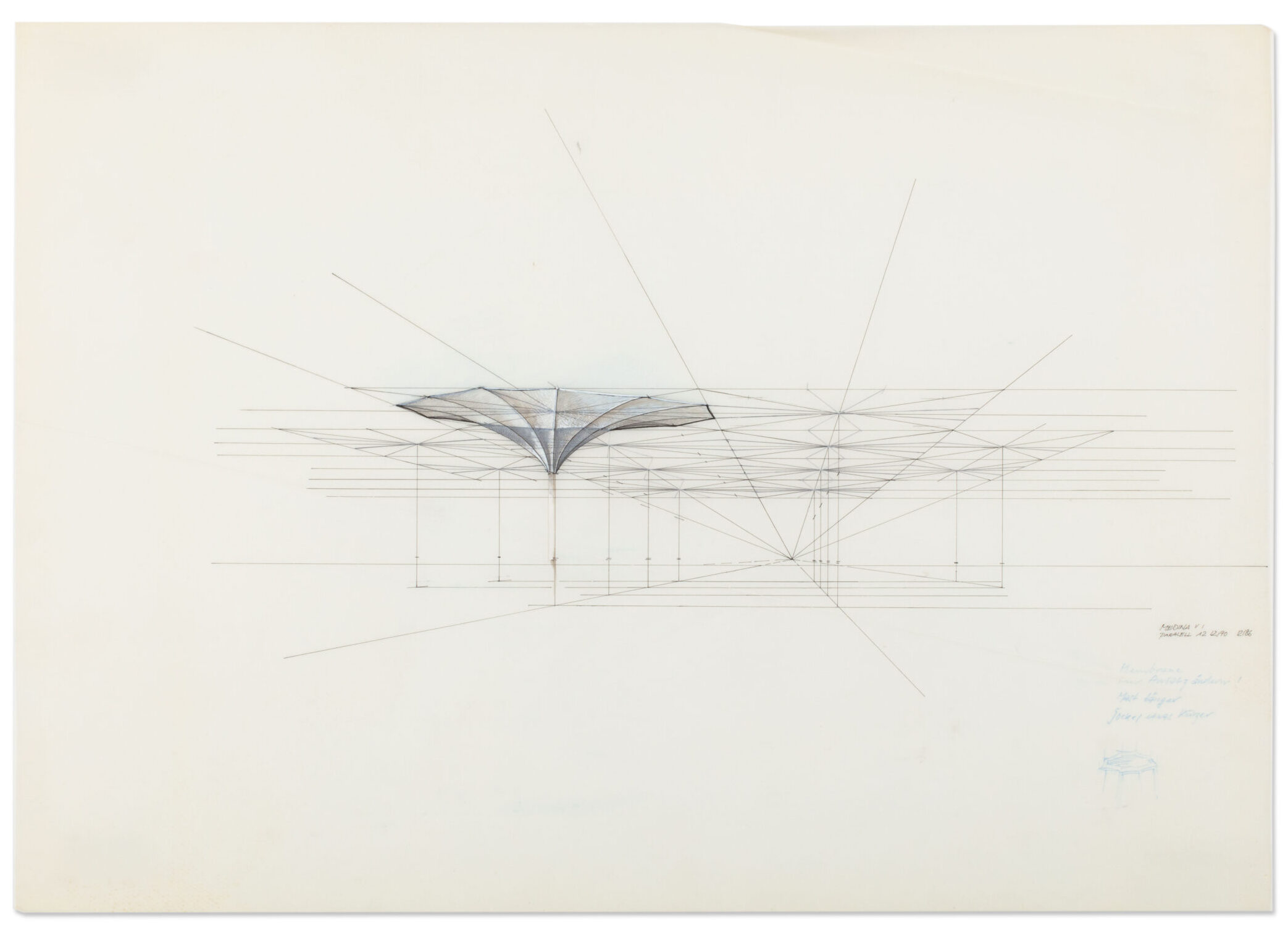
I entered practice at a hinge moment, when the tactile ghosts of ammonia prints still lingered, even as the server room was already ascending to power. To understand how a practice truly operated, [how a principal envisaged it to operate,] I learned to read its past: the overworked details, the repeated motifs like refrains, the hand-sketched notes in the margins, the half-finished ideas abandoned to deadlines. The dust on those archives always felt to me like a sign of unfinished conversations. By responding to the drawers’ invitation and lifting the lid on past work, I could trace what an office cherished, what it regretted, and where it still longed to go. Perhaps that’s why I found my footing most easily in those practices, and with their principals, whose past projects still whispered of what might have been.
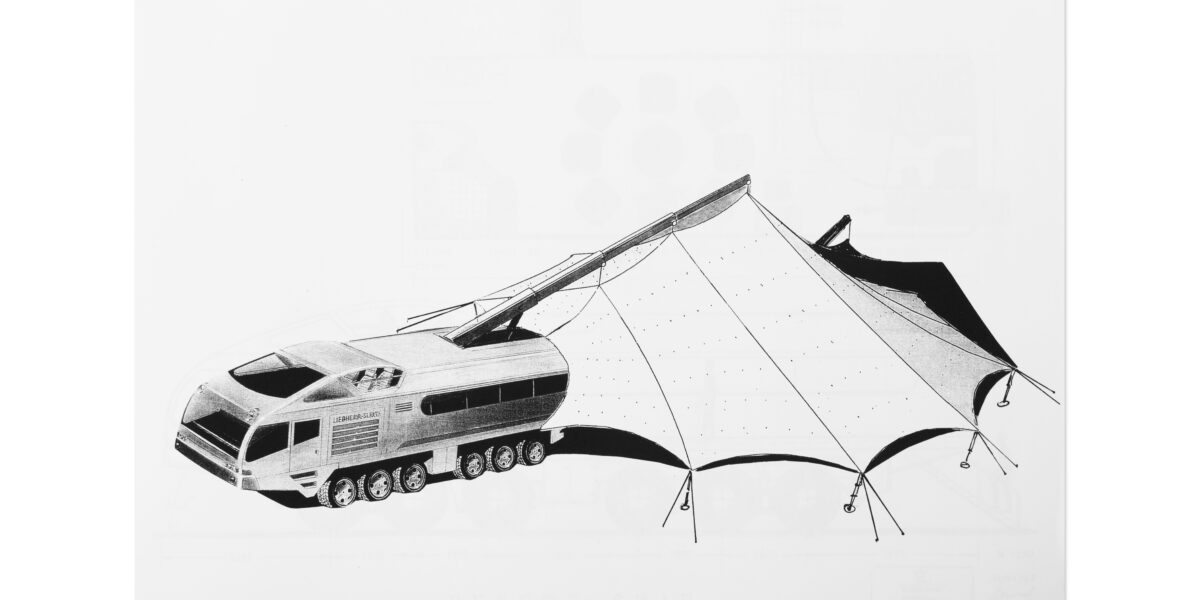
SL Rasch design for Desert Ship desert vehicle, developed with Liebherr
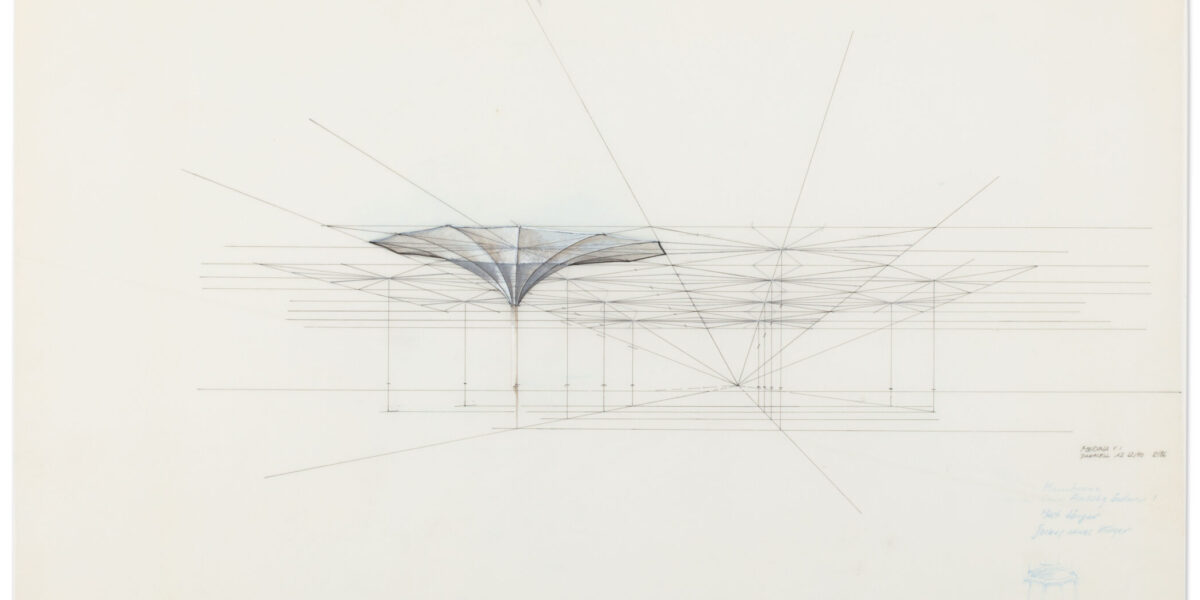
Rasch’s Stuttgart archive pushed that instinct to another scale. Here, the material was almost vaulted away, yet just as alive with possibility. Drawers and cabinets opened onto layer upon layer of hand-drawn overlays charting the choreography of domes, mechanical ballets shifting from shade to sky in seventy seconds; hand-painted renderings of 17×18 meter umbrella units and tent prototypes; and white cotton structures designed for a Pink Floyd tour in 1977, tested in Cleveland while whispering echoes of their desert fates.
Each drawer told a chapter in a story that many visitors in Den Bosch (and which many architects) may not yet know. Rasch studied at the University of Stuttgart and worked with Frei Otto (1925-2015) at the Institute for Lightweight Structures from 1966 to 1970. Under Otto, tensile structures and soap-film experiments were never mere formal curiosities; they were ethical propositions about efficiency, lightness, and responsiveness. The work that followed from 1974, when Rasch travelled to Saudi Arabia, converted to Islam, and performed the Hajj pilgrimage, is, as they say, history—the very history that anchors the exhibition itself. It is a history that extends Stuttgart’s renowned postwar modernism into one of the most climatically and logistically demanding contexts on earth.
In one of our many conversations, Rasch described his work as “romantic mechanical engineering;” the phrasing of which seemed contradictory to me at first. But when I started to align my view of architecture with his, in how it can operate in the service of millions of pilgrims who travel to a single point on this earth to perform one of the pillars of their faith, it started to make sense. Romance, in this context, is not sentimentality but a belief in matter’s near-miraculous capacity to move in the service of life.
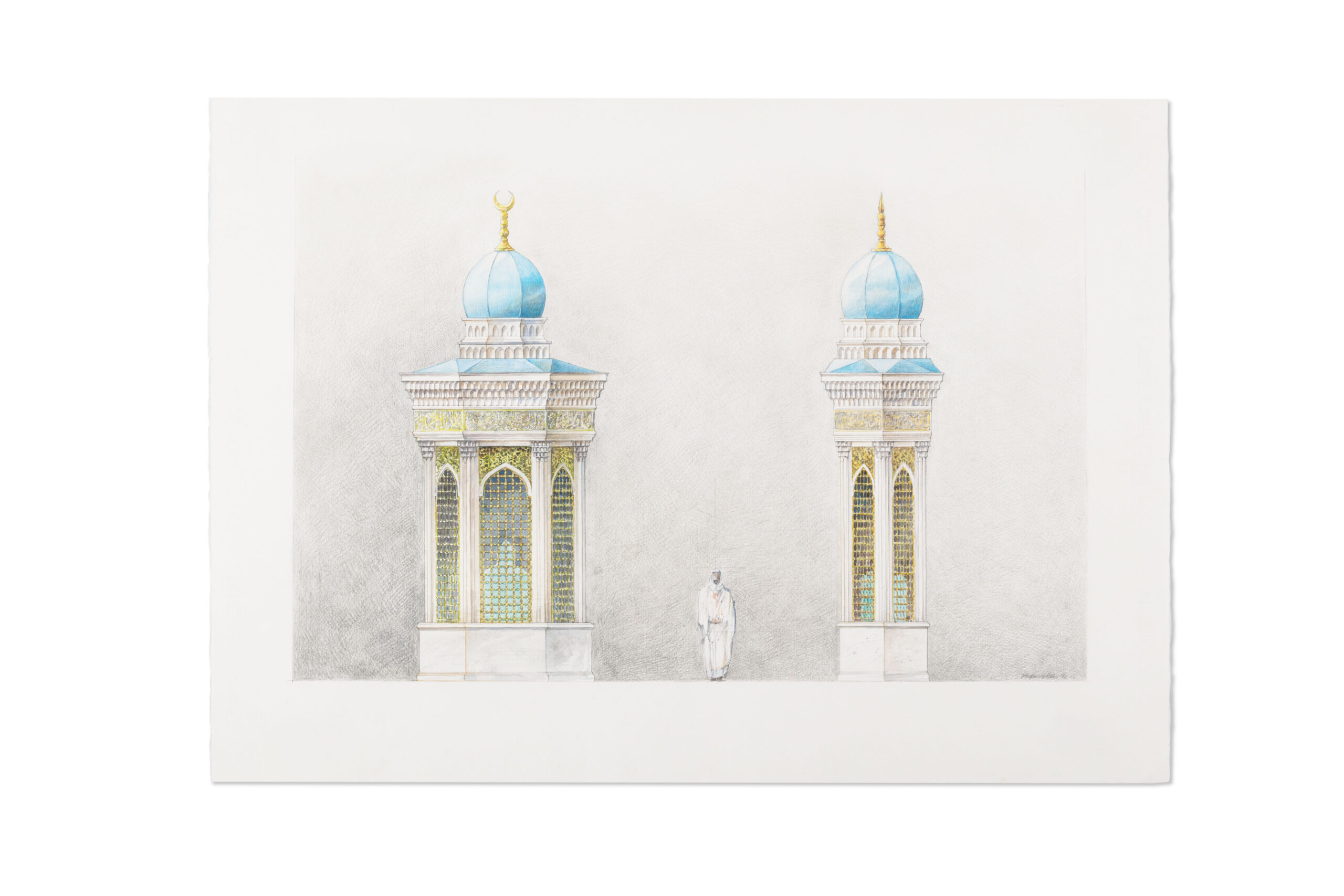
Rasch’s architectural legacy would evolve (amongst many more) into a system of climatic instruments that shade millions of pilgrims in heat exceeding 45 degrees Celsius, and into apertures that regulate light and air for their individual comfort while preserving the openness essential to collective prayer. These are machines precisely tuned to the sun’s path and the rhythms of worship; engineering, quite literally, in the service of devotion.
For someone like me, this archive was both an invitation and a challenge. Standing in front of this trove of knowledge, I was reminded how differently belief can inhabit architecture. Rasch’s devotion is tangible, rendered in geometry and mechanism; mine, if it exists, is quieter—more skeptical, perhaps, but still drawn to the notion that design can serve something larger than itself. I am moved by this dogma as much as I am by its spatial consequences: the choreography of devotion, the ethics of shelter, the humility of light and shade. In those rooms, I wondered whether architecture might have been my own form of prayer; measured not in ritual but in attention.
Despite enjoying the work of architecture, and perhaps being good at it [I was often trusted with new clients, significant commissions, and was always well paid: a reasonable metric to use,] I made a conscious choice in 2016 to step away from conventional practice. I left daily architectural work to pursue research, writing, and advocacy, to think about how architecture operates as a cultural and political force as much as a technical one. Yet standing there, surrounded by drawings, precision-cut maquettes, and a library that could enthrall a theologian as easily as a mechanical engineer, I felt the pull of practice again. Not the practice of the image economy or of iconic form, but a quieter, more patient kind, measured by the lives it touches: by the millions who find rest in a patch of shade, who move through carefully calibrated landscapes, who experience ritual more comfortably because steel and textile have been made to listen (and to yield) to climate and crowd.
At one point, after several days of working together and talking through his life and work, Rasch casually mentioned that he had some new projects ahead and suggested I might join him on his next adventure. The offer was likely made in passing; I’ve worked with enough principals to recognize how they think, how teams expand the moment fresh work lingers on their doorstep. Yet in that instant, and for a moment, I let myself consider it. Could I leave the dynamism of Amsterdam, and the precarious, often underfunded world of research, writing, and activism, for a more contained life in practice on the outskirts of Stuttgart? Could the next city on my itinerant map, after years of moving between offices and institutions, really be this one; a place where modernist structural intelligence had quietly reoriented itself toward ritual life?
The momentary consideration was not only about architecture as work. It was about what I [or rather, we] consider central or marginal within architecture as discourse. Rasch’s work has shaped the embodied experience of millions upon millions of people, yet he remains largely absent from the canonical story of late twentieth-century architecture even in Germany or across the Islamic sphere. His archive, too, has been consulted before; this exhibition is not the first to draw from his drawers. And yet the sheer physical presence of the material; the density of plans, the patience visible in iterative overlays, the notebooks of mechanical sequences continues to unsettle the figurative dust of disciplinary neglect.
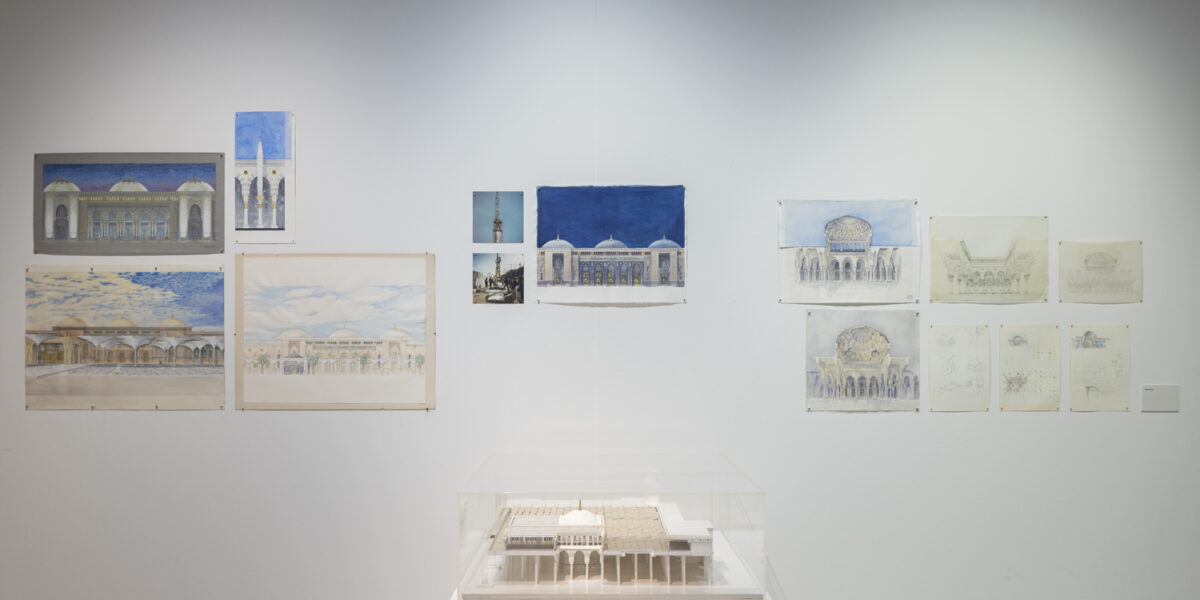
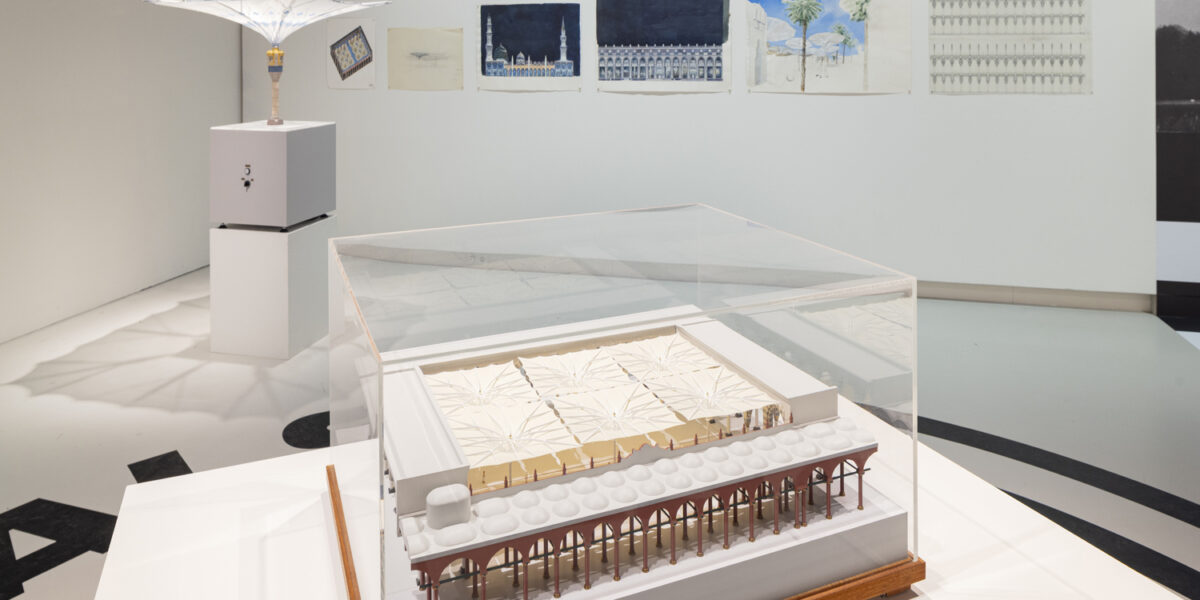
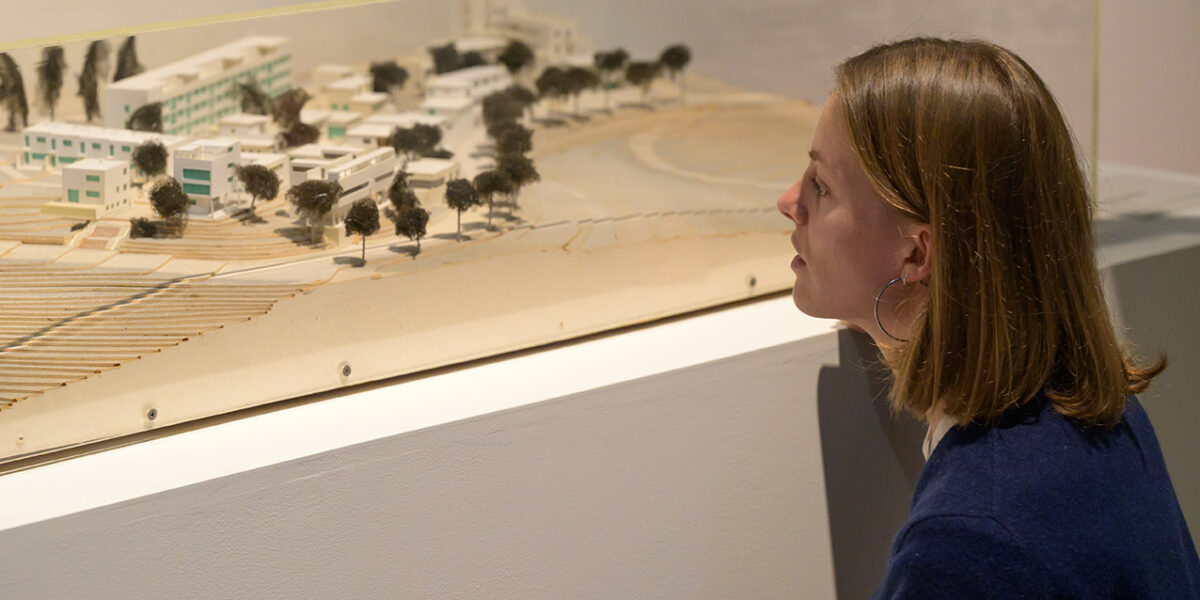
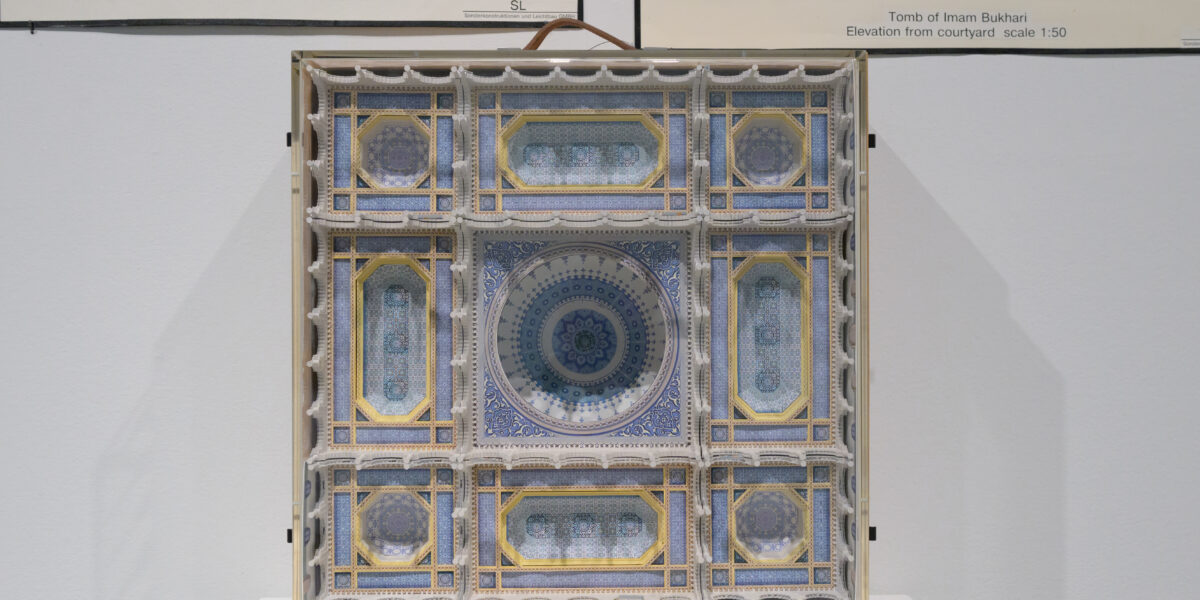
In that sense, the sanctity of the architectural artifact lies not only in paper and models but in what they allow us to see. The sliding domes and magnificently intricate umbrellas are not just extraordinary feats of engineering; they reveal another metric of architectural value, one grounded in endurance and service rather than visibility and acclaim. To stand before their drawings in Den Bosch is to encounter a different story of modern architecture, one in which the line from Bauhaus to Mecca does not break but bends, carrying the lightweight doctrines of German modernism into the heart of Islamic sacred space.
The retreat into the physical archive, for me, is not a retreat from the present. It is a way of asking what kinds of work we choose to remember, and what quietly slips through the bright fissures of our screens. In Rasch’s drawers, practice unfolds as a series of overlapping campaigns, revisions, and returns: messy, patient, recursive. It reminds me that architecture breathes as much in the traces of its making as in the images of its completion, and that the quietest mechanisms [the ones that do their work so seamlessly they disappear] are often those most worthy of devotion. Perhaps that is why I remain within the precariousness of research, writing, and advocacy: because my life’s work— my attention — may be best spent retracing those faint lines from the periphery to the centre. Maybe my devotion is to keep insisting that what lingers at the margins of Western canons still has the power to redraw the map of value in the world.
Ali T. As’ad is a researcher, architect, and editor based in Amsterdam. His practice bridges curatorial research, spatial justice and critical design pedagogy; treating architecture as culture beyond the built form and curating as a method of infrastructural negotiation and critical inquiry.
More Articles
Dust, Dogma, and the Drawers’ Invitation
Researcher and architect Ali T. As’ad conducted extensive archival research in Stuttgart, at the studio of Dr. Mahmoud Bodo Rasch. Discover his findings and his personal connection to this research in this exclusive article.