Tradition is a way of defining and preserving a set of supposedly authentic customs. In so doing, it aims to establish an unbroken connection to a (shared) past—whether that of a people, a tribe, or a family. Many traditions that we consider centuries old are often not as ancient as we think, and were deliberately created to consolidate power or resist change. Traditions have also emerged in architecture and design — ideas about the “right” way to practice these applied arts.
In 1907, the Deutscher Werkbund was founded in Germany, a union of German designers, architects, and manufacturers. This alliance aimed to make German industry competitive with Great Britain and the United States. It sought to translate concepts such as technological efficiency, scientific objectivity, and economic profitability into design. The Bauhaus emerged from this movement. All of this often marked a radical break with the past. This rupture was expressed in the design language, choice of materials, and ideas about ways of living. Ornamentation was rejected, forms were simplified, and everything had to be light and open. This approach became the foundation of modern design.
Bodo Rasch Jr. was always opposed to traditional architecture. His father and uncle had already been experimenting with non-traditional buildings and furniture and were card-carrying members of the Werkbund. When Dr. Rasch began studying architecture himself, he quickly became disillusioned — until he discovered the studio of architect Frei Otto, and was instantly captivated. Rasch became Otto’s student and developed into his protégé. Together, they experimented and created a different way of practicing modern architecture, using nature and its principles as their foundation.
Rationality, in their vision, was not expressed through basic geometry, but through complex structures that arose from the most efficient way to distribute forces and discover form.
Text continues after the photo.
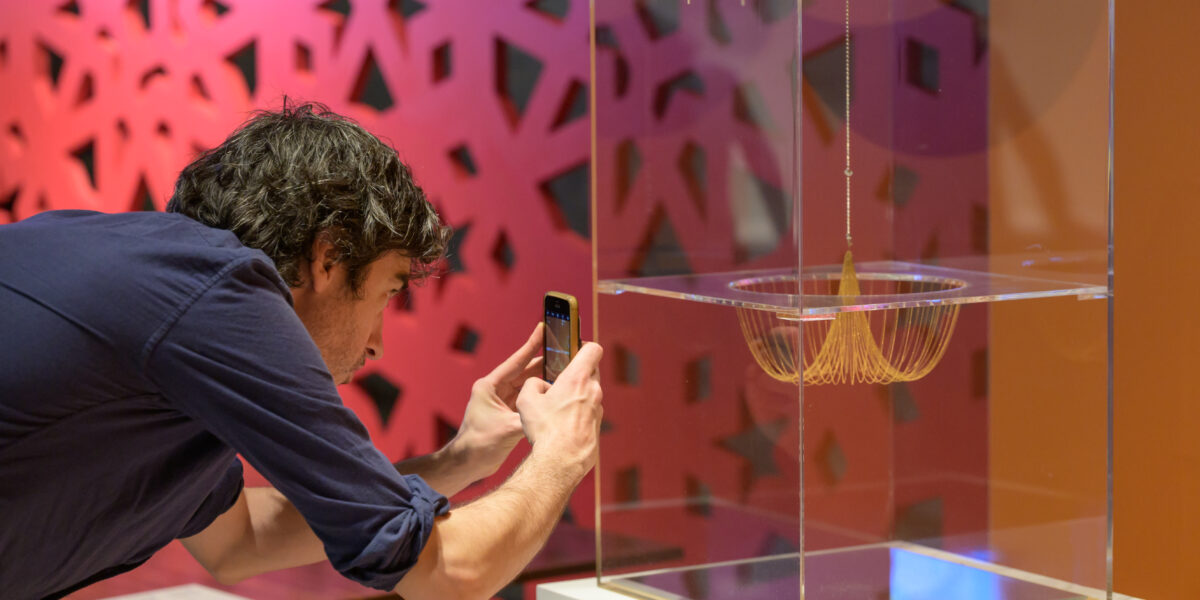
Photo Ben Nienhuis
Bauhaus
The Bauhaus was, first and foremost, a school founded by Walter Gropius in 1919 in the German city of Weimar. The name has become synonymous with European Modernism and a symbol of an international design tradition. Within the school, craftsmanship and the visual arts were aligned with new ideas about industrialization and mass production. In essence, it was about formalizing the conversations designers had been having within the Deutsche Werkbund, an organization that brought together German designers and the German industry.
For many artists, the horrors of the First World War marked a radical break with the past, prompting them to search for ways to build a new world. The founding of the Bauhaus in 1919 cannot be seen separately from this. Ironically, the very tools that had turned the First World War into such a vast battlefield—industrialization and mass production (in this case, of weapons)—were now seen as the very means that could liberate humanity from the rigid structures and traditions of the past.
Simplicity, efficiency, and essence were central concepts at the Bauhaus, aimed at creating clear, functional design. Away with the dark, heavy baggage of the past. Openness and light became the guiding principles. Only then, it was believed, could a new enlightened world emerge. This became the design language of modernity—an international language that transcended national borders.
Still, not everyone was enamored with these ideas and the practices they gave rise to. In 1925, the Bauhaus relocated to the city of Dessau because the Weimar city council had grown tired of complaints about immorality and disorder. In Dessau, a new school building was constructed based on Bauhaus principles. In 1928, Gropius stepped down as director and was succeeded by the strongly socialist architect Hannes Meyer. In 1930, the radical Meyer was forced out, dismissed by the mayor of Dessau. Architect Ludwig Mies van der Rohe became the new director, but the Nazis shut down the school in 1931. Van der Rohe opened a private school in Berlin in 1932, but it was closed a year later by the Gestapo.
The teachers of the Bauhaus spread across the globe, taking up teaching positions at universities and academies. In this way, the ideas of the Bauhaus continued to spread and, in time, became a tradition in their own right. In 2024, the far-right German party AfD attacked Bauhaus anniversary celebrations, claiming the movement was anti-traditional.
Frei Otto
Frei Otto (1925–2019) lived up to his name. He practiced architecture in a free way — free from tradition, free from dogma. When Dr. Rasch, then a young architecture student, walked into Otto’s studio in Stuttgart in the mid-1960s to start a summer job as a plaster modeler, he had no idea what was in store. Architecture here was approached differently: experimental, scientific, interdisciplinary. Dr. Rasch had become disillusioned with his architecture studies, finding them dull and uninspiring. But here, in Frei’s studio just around the corner from his academy, he found exactly what he was looking for. It marked the beginning of a lifelong collaboration and friendship.
Otto specialized in tensile structures, which allowed for the creation of large spans using lightweight methods. His ideal was to build using as little material and energy as possible, even experimenting with soap film membranes to study how nature distributes forces in structures. These experiments led to an organic form of architecture, full of branching elements and undulating surfaces. In Otto’s vision, you didn’t create form — you discovered it. His studio brought together a wide range of disciplines, from mathematicians to paleontologists. Computers were introduced into his practice very early on, enabling the development of even more complex geometries.
As an innovator and a pioneer in civil engineering, Frei Otte founded the Institute for Lightweight Structures (Institut für Leichte Flächentragwerke) at the University of Stuttgart in 1964, where he remained a professor until his retirement. His most famous work is perhaps the roof of the Olympic Stadium for the 1972 Summer Olympics in Munich. The architect of the complex, Günter Behnisch, had been inspired by the Otto-designed German pavilion at the 1967 World Expo in Montreal, and after winning the competition to design the stadium, Behnisch brought him on board to design the roof.
In 2015, Frei Otto was awarded the Pritzker Architecture Prize, the highest honor in the field. He was scheduled to be announced as the winner on March 23 of that year, but Otto sadly passed away only two weeks prior, on March 9.
The brothers Heinz (1902–1996) and Bodo Rasch (1903–1995), the uncle and father of Dr. Rasch, worked together in their joint firm on architecture, furniture design, and exhibition construction. Their collaboration was brief (1926–1930), but during that time they were part of the German avant-garde design movement. They loved to experiment, and their favorite object to experiment with was the chair. They even wrote a seminal work on furniture titled Der Stuhl (The Chair) in 1927. The floating chair was their ideal, and they designed several models. Their furniture was used to furnish two homes in the modernist model neighborhood “Weissenhofsiedlung” in 1927 in Stuttgart. This experimental district also functioned as an exhibition of modern architecture, featuring some of the leading figures of the time, such as Walter Gropius, Ludwig Mies van der Rohe, Mart Stam, and others.
After 1930, the Rasch brothers each went their own way. Dr. Rasch’s father continued to pursue his fascination with suspended and inflatable structures, though these remained at the conceptual stage and were never fully realized.
Text continues after the photo.
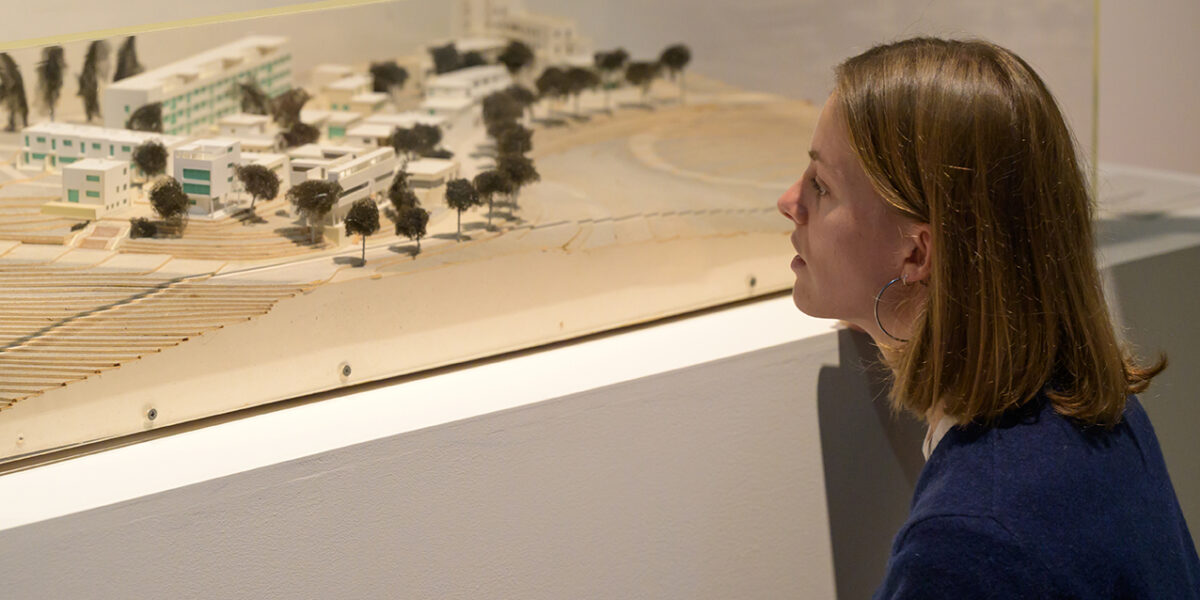
The Weissenhofsiedlung
In 1924, the idea for a new residential district emerged in Stuttgart, with the Württemberg branch of the Deutsche Werkbund playing a major role. Architect Ludwig Mies van der Rohe was appointed as artistic director and he selected 17 of the most promising stars of modernist architecture, among them Walter Gropius, Le Corbusier, J.J.P. Oud, and Mart Stam. Together, they rapidly designed and built a neighborhood with 21 buildings whose purpose was to showcase the latest developments in modernist architecture. The Weissenhofsiedlung opened in 1927 and was immediately scorned by the local press and residents of Stuttgart. They found the mostly white buildings with flat roofs alien to the area. The press mockingly dubbed the neighborhood “Das Araberdorf” — the Arab village. According to them, it looked more like a district in Tunisia or Morocco than a German neighborhood in Stuttgart.
The Nazis later eagerly exploited this sentiment, producing postcards of the neighborhood in which they had inserted photo-montaged camels and Arab people. Part of the district did not survive the Allied bombings during World War II and was demolished. Bodo Rasch, Dr. Rasch’s father, advocated for the preservation and restoration of the surviving buildings. He and his brother had originally been involved in furnishing two of the homes in 1927, and thanks in part to his efforts, the district was designated a protected area in 1956. In 2006, the house designed by Le Corbusier was turned into a museum, and in 2016 it was declared a UNESCO World Heritage Site.
More
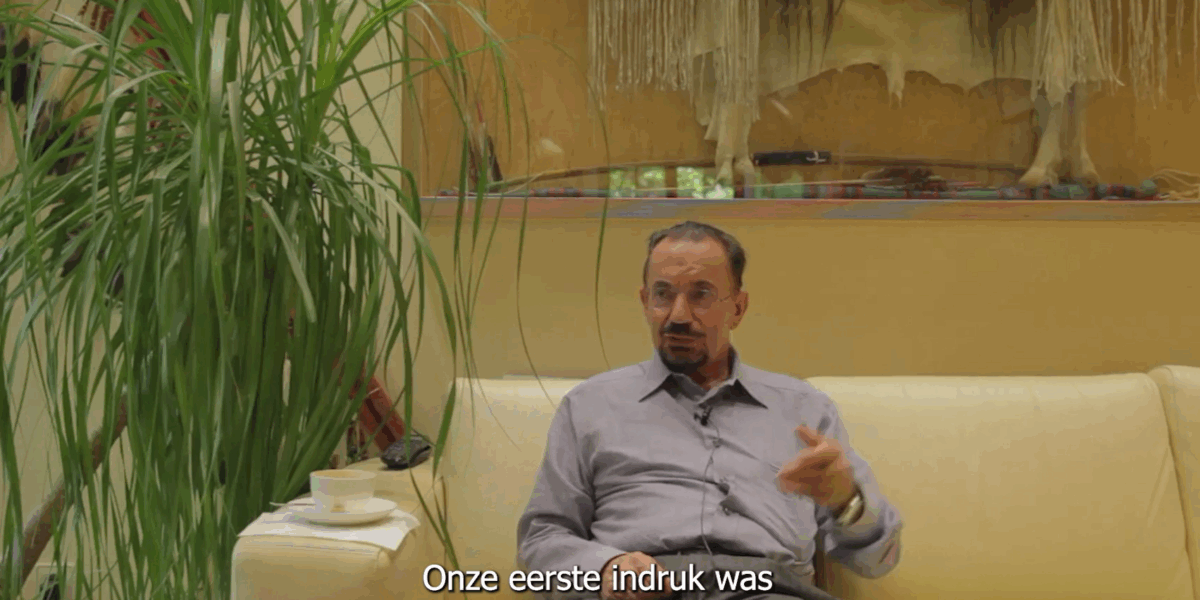
From Bauhaus to Mecca: videos from the exhibition
(Re)watch the documentaries and videos from the exhibition From Bauhaus to Mecca here.
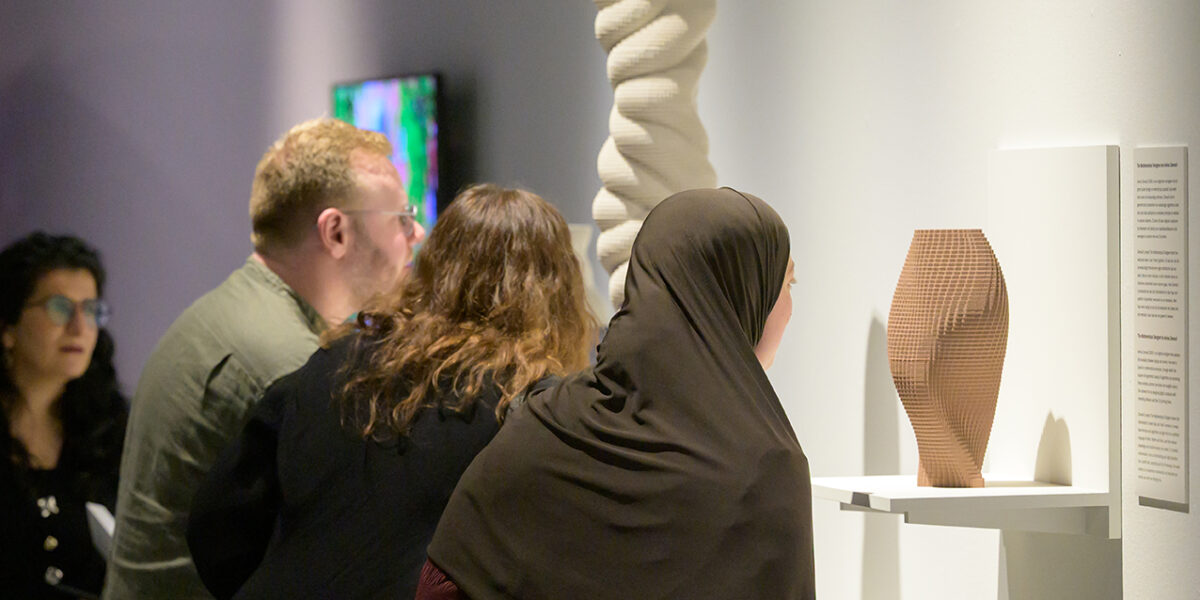
Remixing Tradition
Although some traditions are recent inventions, many are so deeply ingrained that they form the backbone of entire societies.
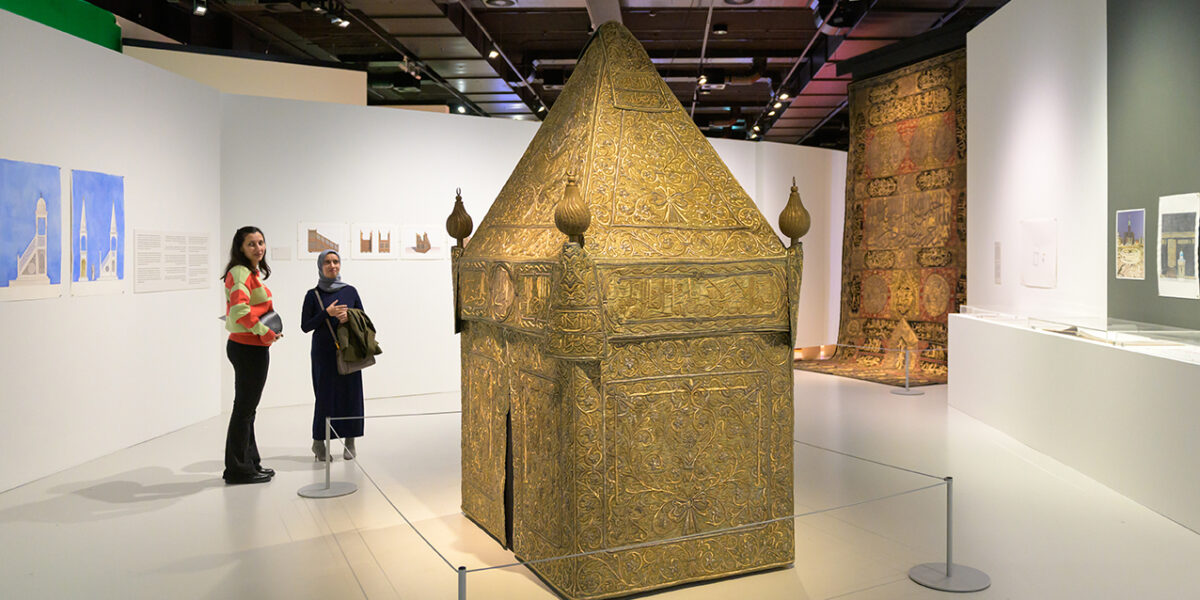
Reinventing Tradition
How do you modernise a religious tradition that is more than 1,400 years old? This was the question Dr Mahamoud Bodo Rasch faced in 1974.