Stack it!
Visiting time: ●●● Short (10 minutes)At the top of the museum’s monumental, twisted staircase stands the ceramics cabinet, in which the museum presents iconic works from its own ceramics collection in small, rotating exhibitions. The age-old technique of stacking takes centre stage in the new presentation Stack it!
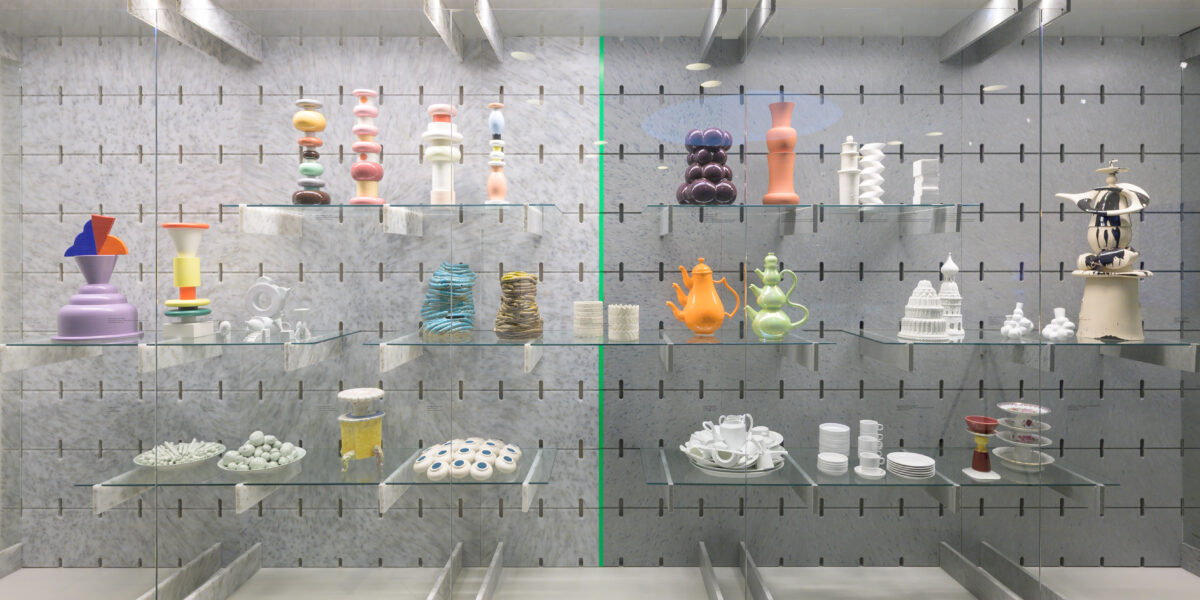
Photo Ben Nienhuis
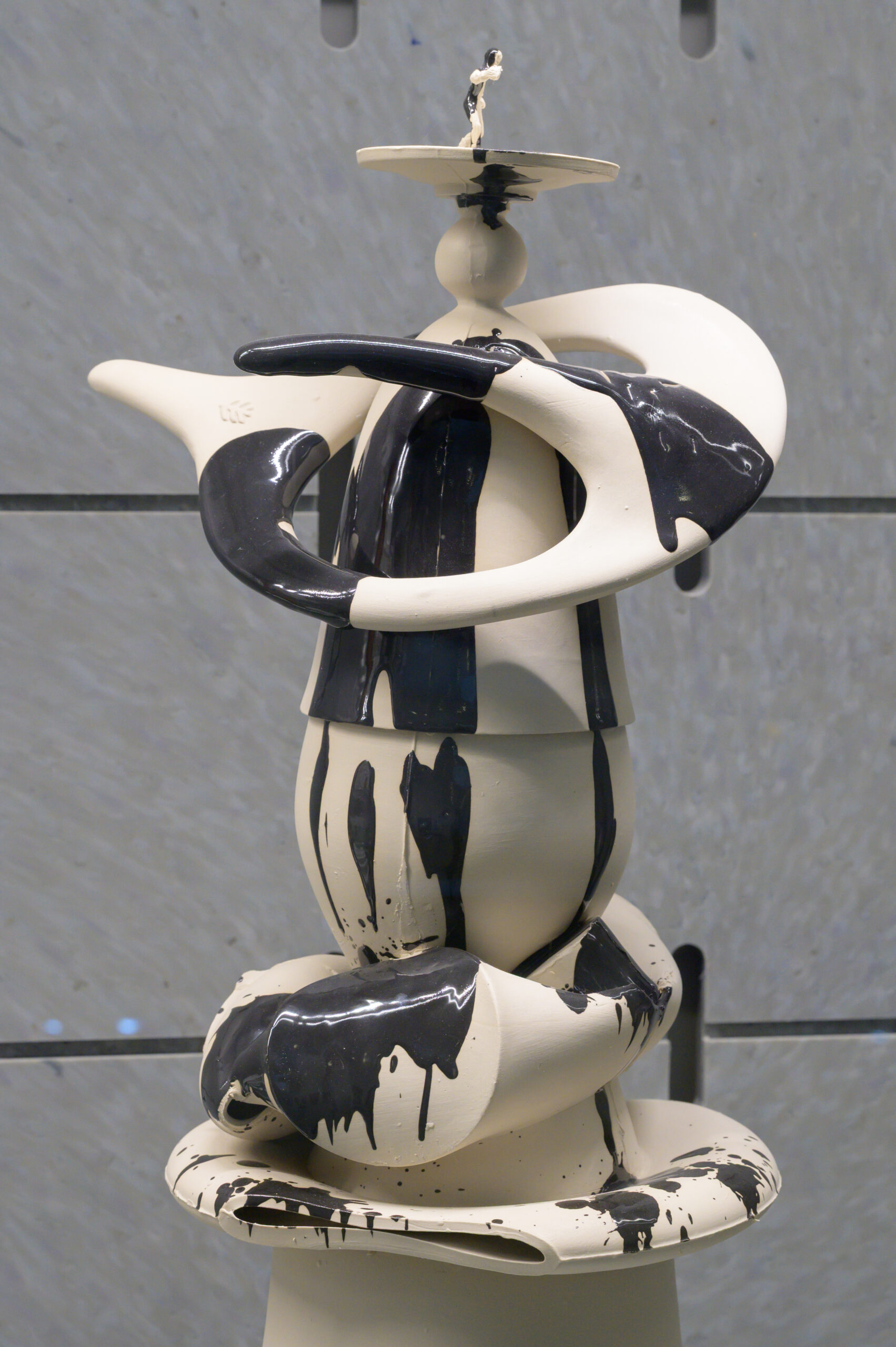
From architecture to furniture, from graphic design to ceramics: placing elements on top of one another creates dynamism, rhythm and structure. In ceramics, however, stacking seems at odds with the organic and fluid character of clay. Ceramicists typically start from a symmetrical, round form, thrown on a wheel. The technique of stacking pays no heed to the material. By combining forms that sometimes appear to bear no relation to one another at first glance, tension and surprise can emerge. Or, in the words of the Greek philosopher Aristotle: “The whole is greater than the sum of its parts.”
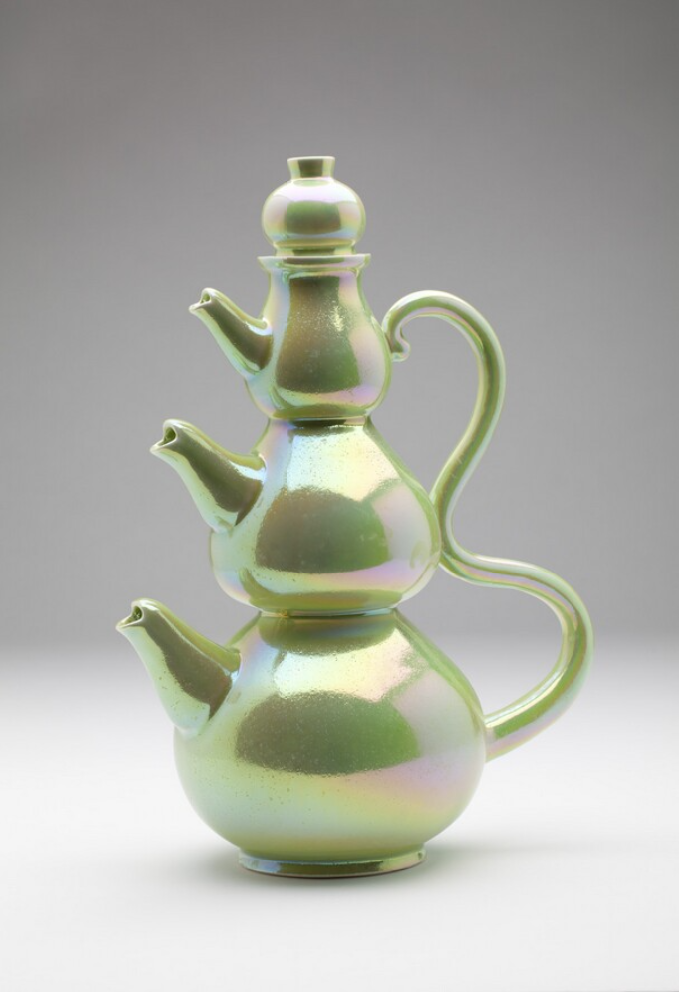
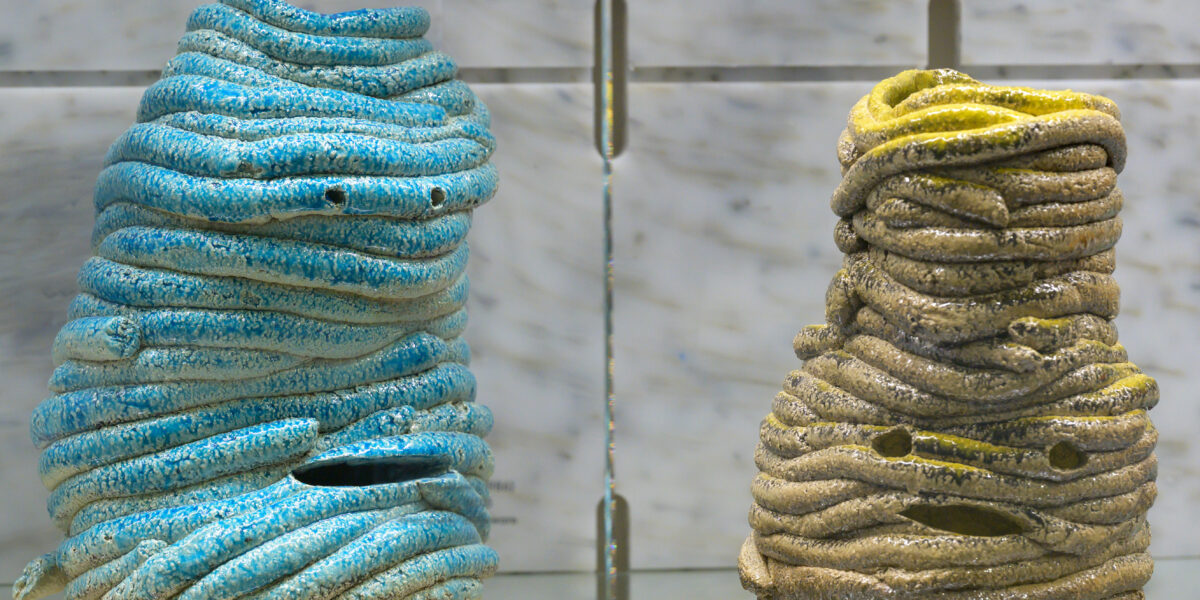
The practice of stacking was already used in antiquity to create structures or to make objects. Consider the pyramids of Egypt, where stones were carefully placed on top of one another to build monumental structures. Or the ceramics technique of coiling, with which vases or bowls have been made for thousands of years by stacking thin ‘coils’ of clay on top of one another. And what does a toddler do when their motor skills begin to develop? They build a tower of blocks (and then knock it over).
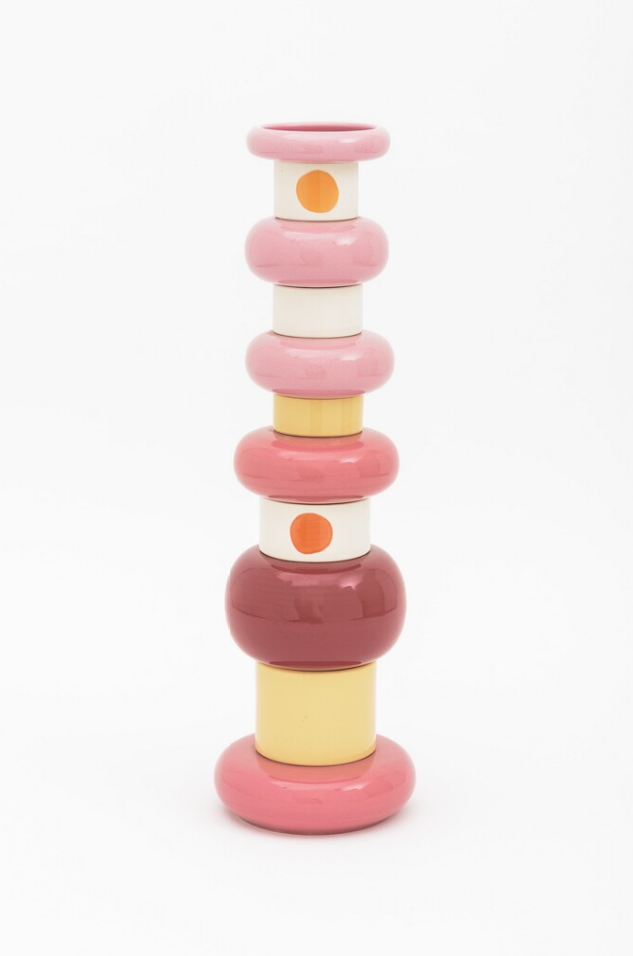
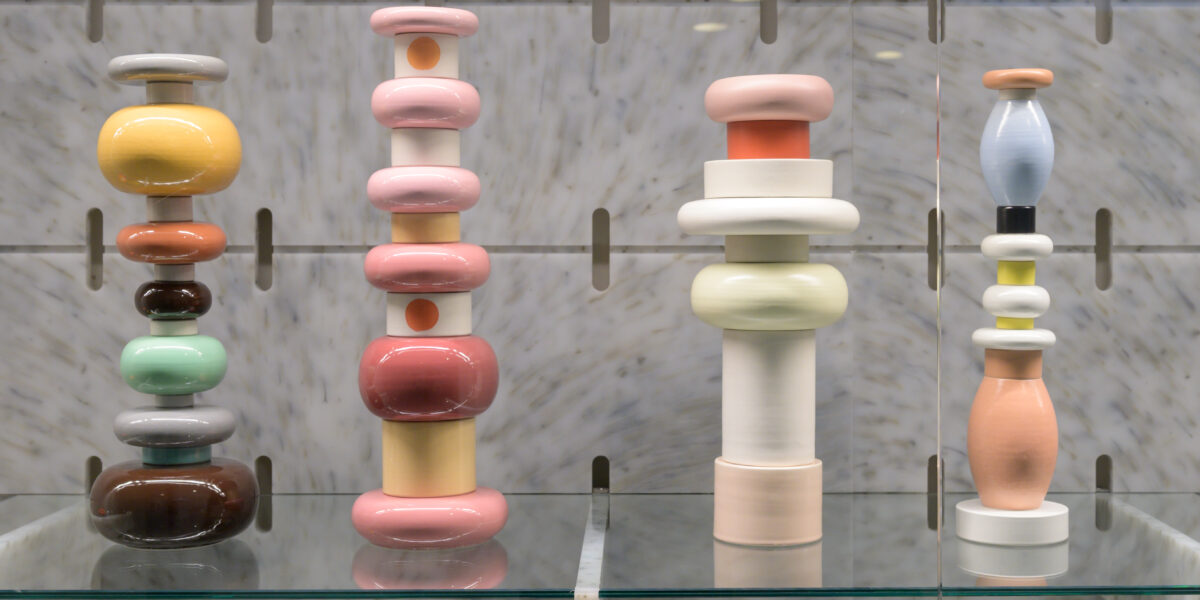
In design, designers play with the tension between order and chaos through stacking. This is clearly visible in the vases and sculptures of Italian designer Ettore Sottsass (1917–2007). These appear to consist of coloured forms placed on top of one another at random. But appearances can be deceptive: form and colour are carefully calibrated.
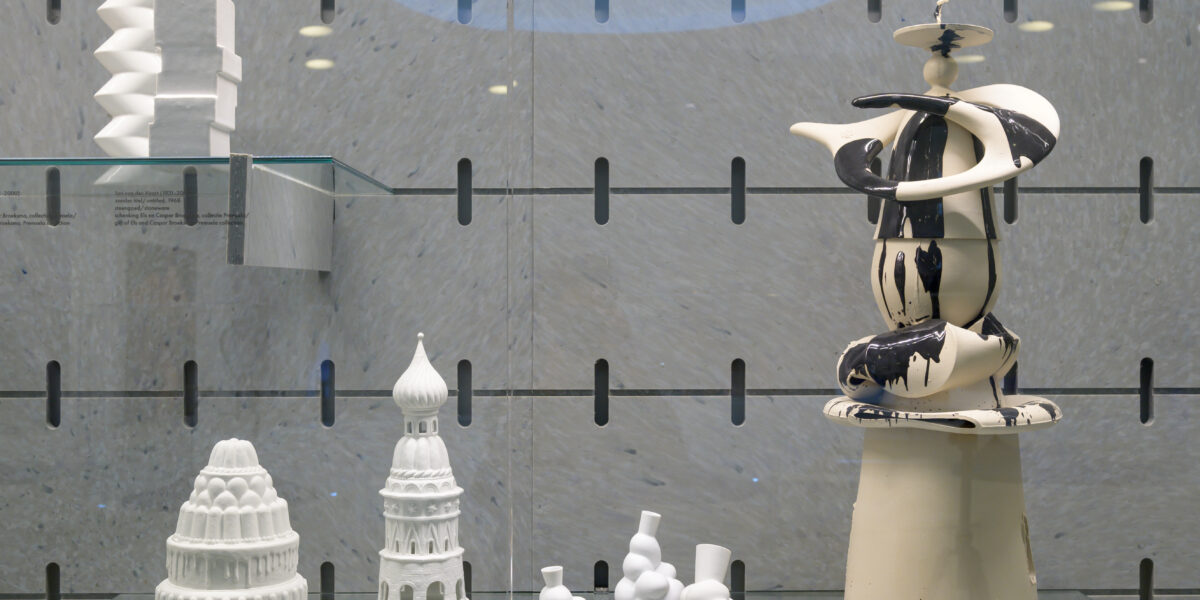
In the decorative table piece by Richard Hutten (1967), too, the designer seemingly stacks forms together haphazardly. Yet the composition is carefully constructed from copies of products made by the Den Bosch earthenware factory Cor Unum.
A modest but unique space for ceramics
The ceramics cabinet was designed in 2022 by Peter Hopman of Bureau Lakenvelder in collaboration with GoGo Plastics. It is made from 100% recycled plastic combined with glass panels. It is a flexible design, inspired by the perforated steel tool wall, allowing ceramic work to be displayed in a variety of configurations at any time.
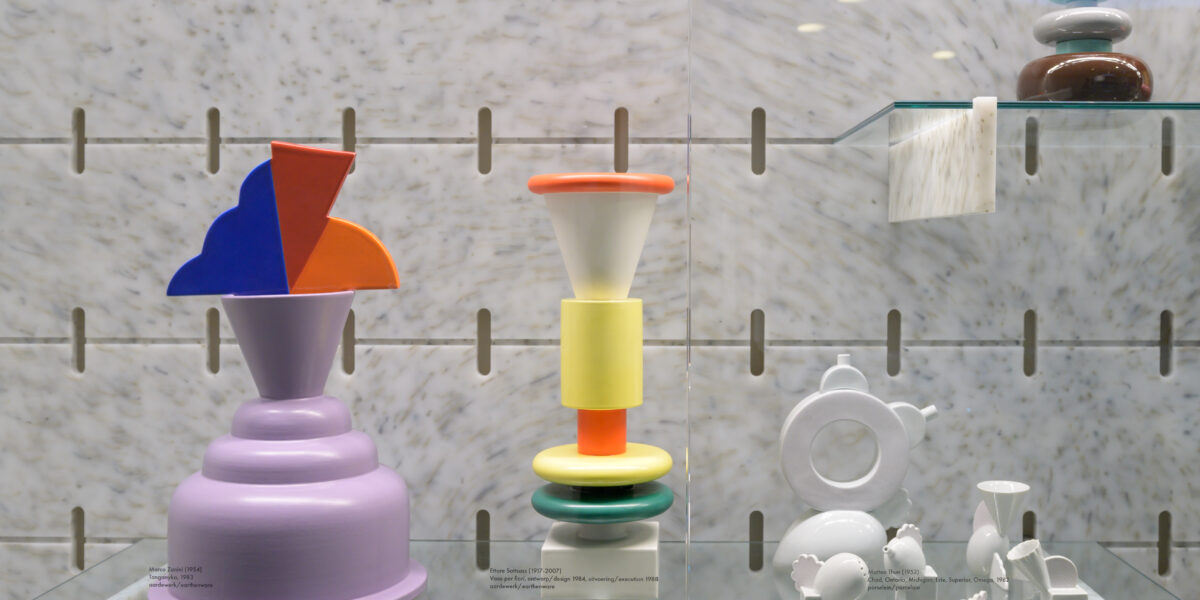
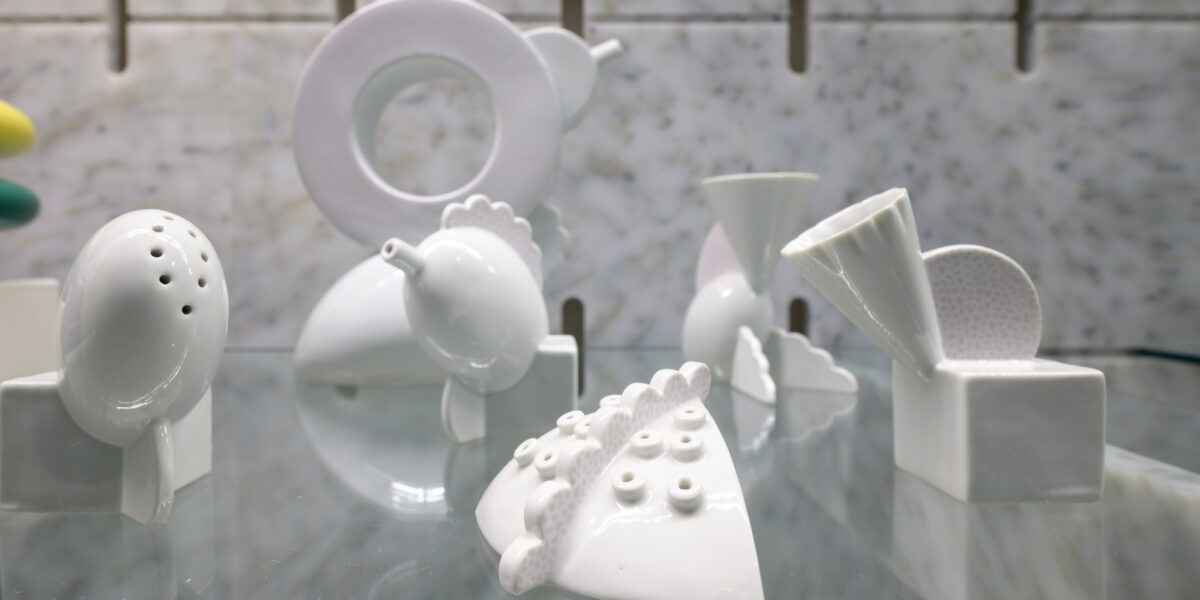
This presentation was curated by conservator Marte Rodenburg. The cabinet was designed by Peter Hopman of Bureau Lakenvelder in collaboration with GoGo Plastics.
This presentation has been made possible with the support of the municipality of ‘s-Hertogenbosch,
provincie Noord-Brabant,

the Friends, Members and Patrons of Design Museum Den Bosch, and Club Design.